Content Governance
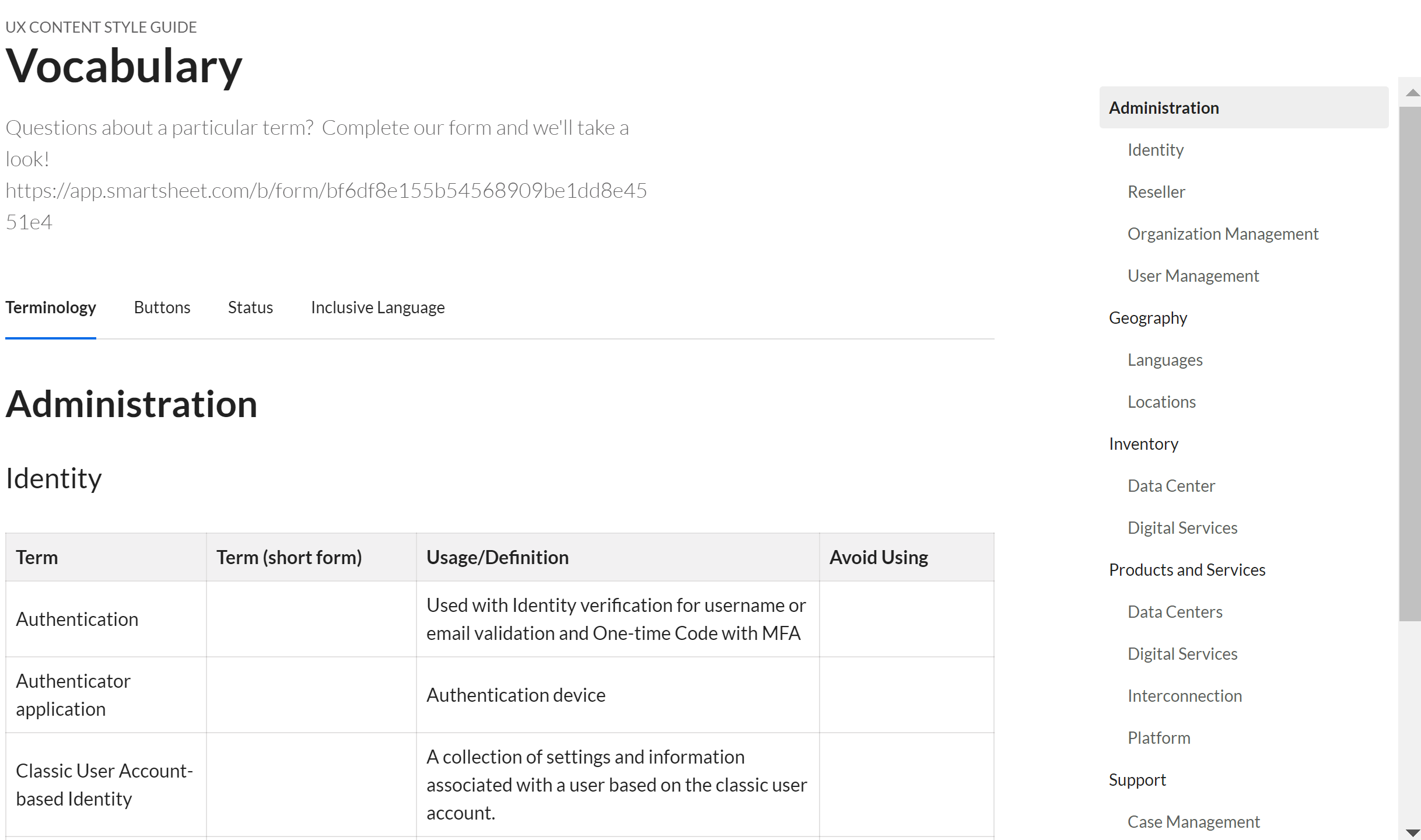
One Vocabulary, One Dictionary
Turning scattered, inconsistent terminology into a single governed source of truth — used across product, documentation, marketing, and internal communications.
1 Problem
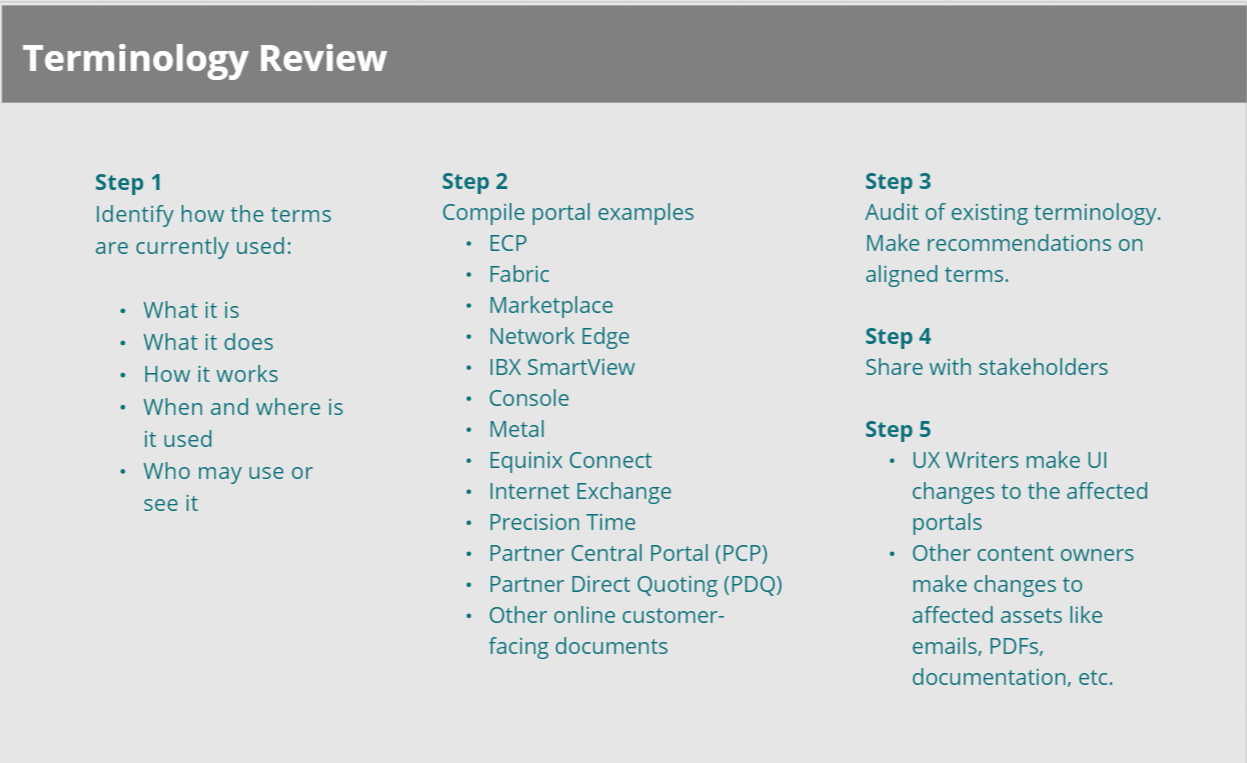
Terminology was fragmented across the company — the same concept could be named three different ways across product UI, documentation, marketing, and internal communications. That inconsistency confused users, slowed down translation (every variant had to be localized separately), and made it hard for new employees and partners to get aligned on what things were actually called.
2 Approach
I led the build of the Equinix Dictionary: a single source of truth for both internal and external terminology, with a formal governance program behind it rather than a document nobody maintained.
- Chartered an Equinix Vocabulary Core Team with a clear statement of purpose: provide a forum and structure for vetting, creating, and governing a source of truth for external-facing vocabulary.
- Defined governance components end to end — charter, scope, roles and responsibilities, terminology guidelines and audit framework, a semi-automated submission process, and a compliance and consistency model.
- Built the dictionary on SharePoint Term Store so employees could search (open, exact, filter) and browse the complete set of terms, submit new terms with validation documentation, and see clearly what should and shouldn't be used with customers versus internally.
- Scoped governance across every surface terminology touches: external communications, presentations, press releases, event materials, social content, product documentation, contracts, digital content, portals, and APIs — plus internal newsletters, all-staff meetings, and intranet pages.
- Connected the governed vocabulary to translation, tagging terms so they could feed directly into the glossaries used by localization vendors, and integrated with enterprise Grammarly so approved terminology was enforced at the point of writing.
3 Result
The company moved from ad hoc, team-by-team terminology decisions to one governed, searchable dictionary with clear ownership. That reduced content development churn (writers and reviewers stopped relitigating the same word choices), improved localization quality by giving translators one consistent glossary to work from, and strengthened brand consistency and customer trust in communications across the company.